




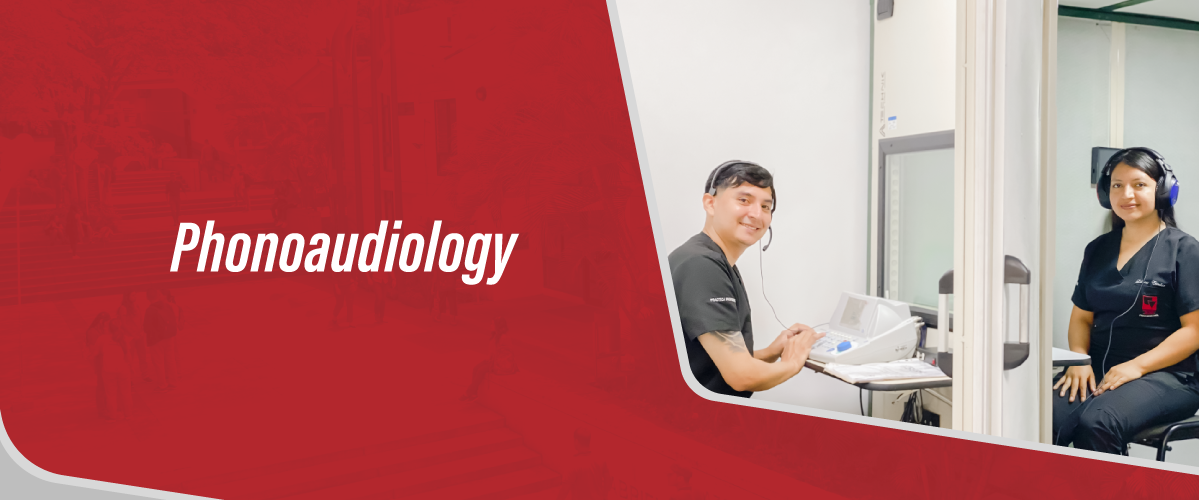
Phonoaudiology
| 569 | |
| Res. 2021 of February 15, 2017 for 7 years. | |
| High Quality Accreditation | Res. 021330 of November 11, 2020 for 6 years. |
| On-site - Diurnal | |
| 10 Semesters | |
| Academic degree | Phonoaudiologist |
| 171 | |
| 35 | |
| Esta dirección de correo electrónico está siendo protegida contra los robots de spam. Necesita tener JavaScript habilitado para poder verlo. | |
| School of Human Rehabilitation | http://rehabilitacion.univalle.edu.co/ |
Academic Calendar
For information on admissions dates and requirements, please visit the following link:https://admisiones.univalle.edu.co/
The Academic Program of Phonoaudiology of the Universidad del Valle aims to educate students in a comprehensive manner, with a vocation for social service so that they can practice as competent professionals who provide reasonable, creative and cooperative solutions that contribute to improving the quality of life of people with communication disabilities, their families and the community in general, contributing to the development of a more equitable and participatory society.
- To train phonoaudiologists with a multidimensional foundation for the theoretical and practical approach to communication variations and disabilities, so that they can approach intervention in an integral manner.
- To educate in democratic values for the development of citizens who promote respect for human dignity and diversity, equity, participation and the importance of effective communication.
- To train students to practice as competent professionals who propose appropriate approaches and methods in the field of communication variations and disabilities by providing reasonable, creative and cooperative solutions.
- Develop training experiences for the appropriate use of:
- Learning, critical evaluation and self-evaluation resources.
- Oral and written mother tongue, second language, media and information systems.
- Tools and social skills for coexistence, group work and assertiveness.
- Develop management skills: planning, execution and evaluation of quality services.
Professional Profile
- Facilitate the development, maintenance and recovery of population communication throughout the life cycle.
- Identify population at risk of acquiring communication deficiencies and disabilities and provide alternative solutions.
- Prevent, detect, evaluate and contribute to the diagnosis of deficiencies in the structures and functions of the psychobiological processes of communication and related: language, speech, hearing, balance, and swallowing.
- Prevent, detect, evaluate - diagnose, habilitate or rehabilitate the variations or disabilities of:
- Comprehension and expression of non-verbal verbal language, oral and written.
- Motor production of speech. - Design, implement and evaluate augmentative or alternative communication systems.
- Design, implement, evaluate, adapt and facilitate the use of technical aids for communication.
- Promote and facilitate processes of social inclusion of people with variations or communication disabilities.
- To manage social projects and provide services in the modalities of direct and indirect assistance, advisory and consulting services.
- Incorporate research principles into professional practice.
- Participate in the development of lines of action in the attention to disability as a social problem.
Occupational Profile
In relation to the occupation, the speech therapist works for the communicative well-being of the community, with children, adolescents, adults and the elderly who have variations or disabilities in communication or who are at risk of acquiring it, in components such as:
- Promoting health and communicative wellness.
- Prevention of impairments of body structures and functions of the biopsychosocial processes of communication and swallowing.
- Habilitation or rehabilitation of limitations in communicative and linguistic activities.
- Equalization of opportunities for social participation: Social integration (educational, labor) and symbolic accessibility.
The areas in which he works are:
- Phonoaudiology in Hospitals
- Communitarian Phonoaudiology
- Educational Phonoaudiology
- Occupational Phonoaudiology
- Aesthetic Phonoaudiology
Services are provided directly to the individual, or indirectly through consulting and advising parents, family members, teachers and other professionals involved in the care of individuals. They may work individually, or be part of professional teams.
In Colombia, professional services in this field began to be provided in the 1960s. Law 376 of 1997 regulates the professional practice of the speech therapist.
General information about the Curricular Structure
Phonoaudiology, in the definition of its object and in its practice, is configured in a wide field of interdisciplinarity necessary to describe and explain the phenomena of variation or communication disabilities, as well as to design and support alternative solutions to people's problems. The phonoaudiological knowledge requires an overlapping of Social and Natural Sciences. The study of communication and language processes requires the concepts and methodologies of sciences and disciplines from fields as diverse as:
- Linguistics
- Philosophy
- Social sciences: sociology, economics, anthropology, history, psychology, pedagogy, etc.
- Natural sciences: Biology, physics
- Formal sciences: Mathematics, logic
These sciences and disciplines provide concepts that give way to specialized knowledge of conceptual and instrumental order for the speech therapist to describe, explain and perform professionally providing quality services with social responsibility.
The curricular structure of the academic program of Phonoaudiology is organized according to three training areas and a transversal axis, as specified in Resolution 048 of 2004 of the Academic Council. The training areas are: foundation and complementary training area, disciplinary training area and contextualization area of the profession. The transversal axis is constituted by research, self-training and interdisciplinary work.
Foundation Area
Phonoaudiology is a frontier profession, which means that its field of knowledge is nurtured and built in the fabric of the different sciences and disciplines that contribute to the understanding of the human being that communicates, its variations or disabilities and the forms of intervention. Therefore, the foundation of the Academic Program is built around the following topics:
- Man as a biological, cognitive-affective and social subject;
- Communication and systems of signification;
- Learning processes and ways of teaching;
- The understanding and expression of reality through mathematical language.
Complementary training area
The complementary training area includes contents and practices that stimulate the aesthetic and physical maintenance dimensions of the student. In this area, students are free to choose those subjects that correspond to their particular interests and contribute to their integral formation.
Disciplinary training area
It includes knowledge related to variations and communication disabilities and their intervention, which are recognized by the academic community as developments and experiences of Phonoaudiology. This area is organized around human development throughout the life cycle, the dimensions that make up the phenomenon of variations and disability: body, individual, social and contextual factors; and the components for the care of the population with disabilities: health promotion and prevention of disability, habilitation / rehabilitation and equalization of opportunities.
This area describes the models or approaches from which the explanation, description and classification of the variations and disabilities in communication are approached and the theoretical assumptions underlying the intervention methods are specified, as well as the ways of operationalizing them through procedures and techniques.
Through professional elective training, the aim is to deepen in certain areas of disciplinary knowledge or service provision, articulating the work with research projects of teachers. The objective is to broaden the professional horizon.
Socio-historical and cultural contextualization of the profession.
This training area covers knowledge about the economic, political and cultural reality in which the practice of Phonoaudiology as a profession is inserted. It also contributes to the strengthening of the social and citizen formation of the students. It specifies the legal, ethical and labor frameworks of professional performance.
This area contemplates the legal framework related to Phonoaudiology as defined by the Political Constitution of Colombia, the laws of Health, Education and Labor, the laws and public policies related to Disability and all forms and modalities of service delivery. It is also contemplated the training in Spanish and the training in a second language according to the criteria defined by the Academic Program to respond to its needs.
Transversal axis
This axis crosses all the described areas through the development of contents and pedagogical practices that aim to promote an investigative and autonomous attitude, as well as an interdisciplinary view of the object of study and professional practices. It is also intended to strengthen the integration of the aforementioned components around the disciplinary axis formed by the understanding of the variations and disabilities of communication and its forms of intervention.
Through this axis, the management of the methods of approaching knowledge and the strategies, techniques and modalities of research and data analysis is sought. These formative elements are addressed not only as subject contents, but are included in the pedagogical practices in each of the basic and professional subjects.
As part of this axis, the program's courses include an investigative pedagogical strategy that is the articulating axis of the students' individual and/or group work with the methodological design of the subject. This strategy allows linking theory with practice.
As part of the proposal of the transversal axis, the conscious use of reading and writing is encouraged in such a way that the evaluation can be carried out based on academic products such as reading cards, formal summaries of course guide texts, reading controls, reviews, essays, monographs and final research reports.
Finally, a culture of interdisciplinary collective work is fostered in which the student learns to fairly value the viewpoints of the different disciplines and professions. This implies understanding the complexity of the phenomena addressed and recognizing that the unidisciplinary approach is insufficient both to describe them and to intervene in them. The design of the courses makes explicit strategies that lead the student to make interdisciplinary approaches both in theory and in practice.
 See Curriculum Structure (Spanish)
See the New Curricular Structure (Spanish)
The School of Human Rehabilitation was established as such in 1993. It groups the academic programs of Physical Therapy, Phonoaudiology, Occupational Therapy, Specialization in Cardiopulmonary Physical Therapy, Master's Degree in Physical Therapy and Master's Degree in Occupational Therapy.
In 1967 opens the School of Physical Therapy Techniques. In 1976 it becomes the Academic Program of professional training in Physiotherapy. In 1981 the Academic Program of Phonoaudiology begins. In 1986, the Occupational Therapy Program was started. In 2008 the Specialization in Cardiopulmonary Physical Therapy was created. Subsequently, in articulation with the School of Language Sciences of the Faculty of Humanities, the undergraduate program in Interpretation Technology for the Deaf and Deaf-Blind was inaugurated in 2013.
The presence of our programs has been key in the evolution of health promotion, disability prevention, habilitation, rehabilitation and equalization of opportunities services, as well as in the thinking around human functioning and disability processes.
It has also contributed to the development of public policies and the consolidation of services in health, education and community work, as well as to the strengthening of Non-Governmental Organizations of and for people with disabilities.
In addition to the Undergraduate and Graduate programs, the School has a Human Rehabilitation Service, SERH, to support teaching and provide specialized habilitation, rehabilitation and equalization of opportunities services.
|